
Vending Machine Range
Vending machine manufacturing by 特拼科技. Explore product configurations, sample checks, payment integration and factory acceptance for your operating site.

A machine that reaches the building and cannot pass a door or a turn costs more than any line on its specification sheet. There is no standard vending machine size: measure the whole delivery route against the quoted unit's cabinet and packed dimensions before you order. The worksheet on this page lists each checkpoint from unloading to final position, what to record and who signs it.
Share your products, site and payment requirements with our team.
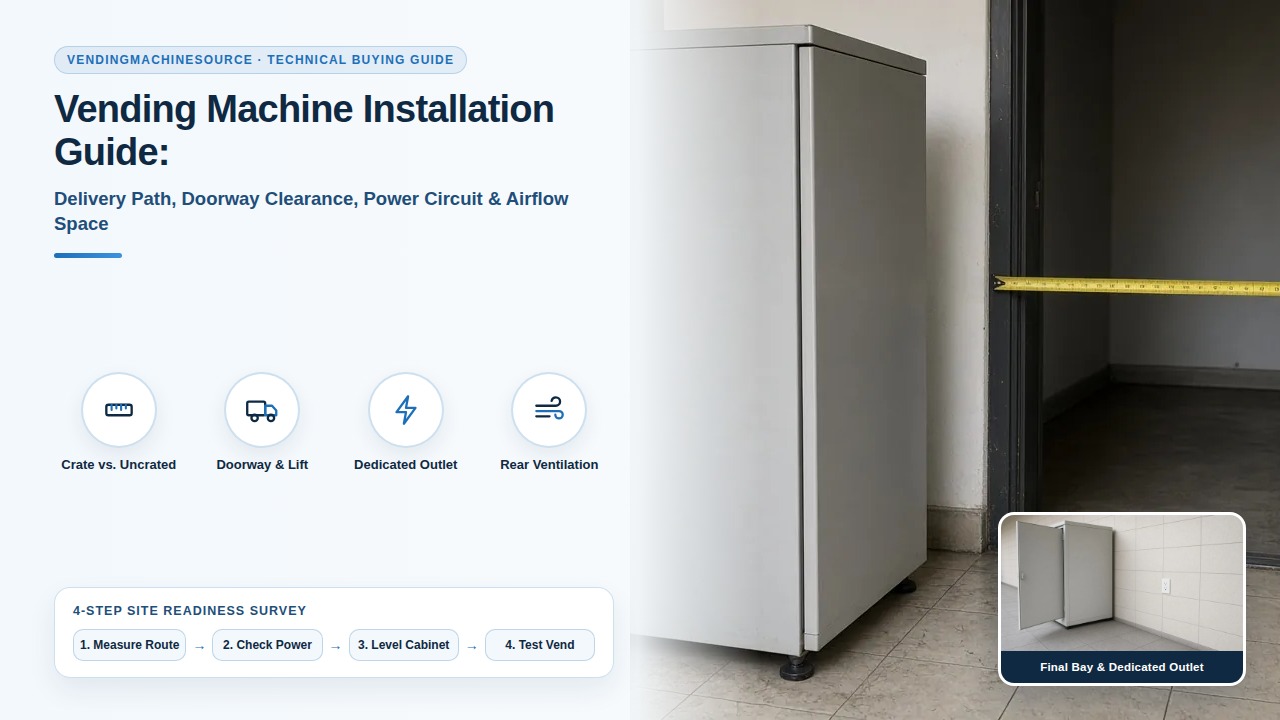
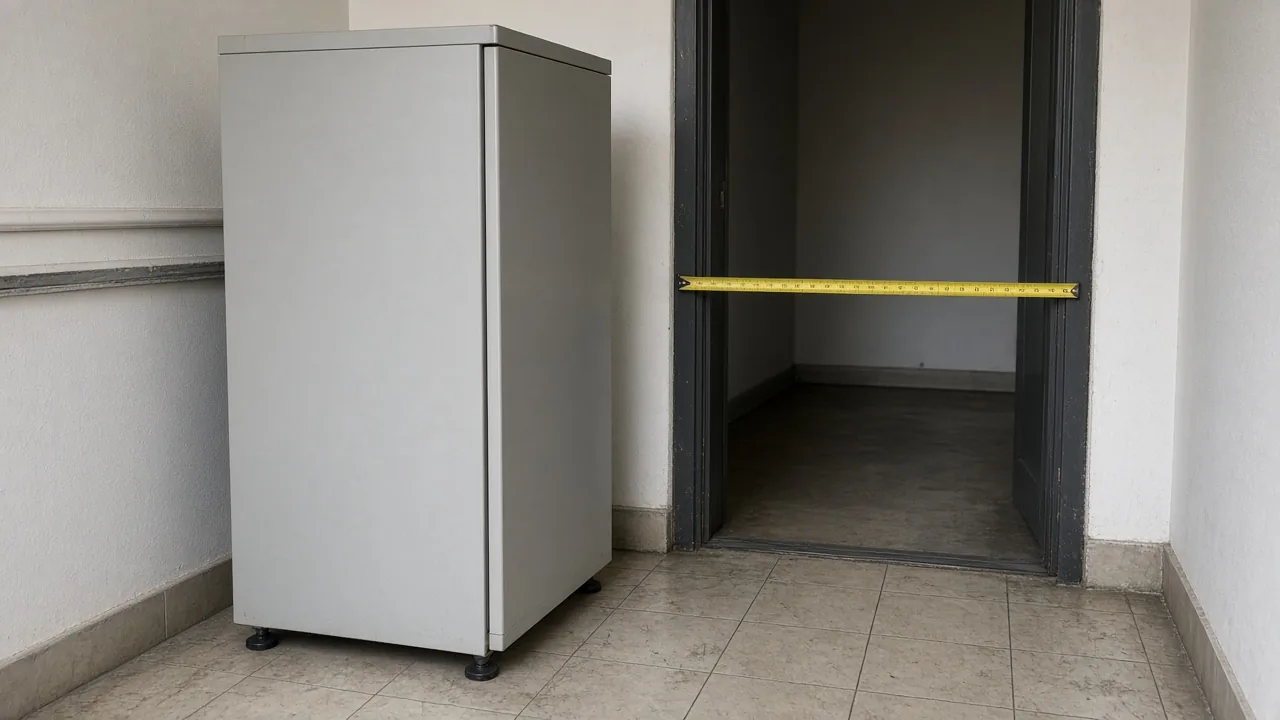
Vending machine size depends on the model, not on the category. Several full-size cabinets in the documents below are listed at 72 inches tall, yet their widths and depths differ, and one campus list includes a can machine 79 inches tall. Before ordering, get the quoted unit's cabinet dimensions, packed dimensions and gross weight. Compare them with the narrowest door, corridor, turn and lift on your route and with the space at the final position, and name the person who signs each check. Use the model documents for dimensions and capacity, and have the installer assess the delivery route.
Each published size describes one machine or one owner's list, so it cannot stand in for a different quotation.
The Royal Vendors RVV Gen II service manual (printed April 2017) lists its 280-capacity version at 72 in H x 39 in W x 36.5 in D, with an approximate empty weight of 720 lbs (327 kg).
The University of Maryland vending specification page (Procurement and Business Services, footer dated 2003-2021) lists a glass-front snack machine at 72 in H x 35 in D x 39 in W and a cold sandwich machine at 72 in H x 35 in D x 37.5 in W. Its two can machines are 32 in W x 26 in D x 72 in H and 40 in W x 31 in D x 79 in H.
The Coca-Cola Solutions equipment page has two stack-machine listings, each next to energy figures labeled as 2011 equipment: one for Royal, Crane and Dixie Narco at 72 in H, 28-37 in W and 33.5-37 in D, and one for Royal at 79 in H, 37 in W and 33.5 in D.
This catalog's Slim Combo record lists 76.5 x 28.7 x 31.2 in (H x W x D) and approximately 474 lbs, from an authorized catalog snapshot dated 13 September 2026. Use the selected model drawing and agreed acceptance criteria for the shipment.
Takeaway: an example from another machine shows which fields to ask for. Only the quoted unit's documents can fill them.
Measure each point the machine will pass, at its narrowest and lowest, from where the truck stops to the final position.
Unloading point: the dock, ramp or kerb, the surface between the truck and the entrance, and who unloads. The University of Maryland page asks planners to consider access by ramp, elevator or loading dock for both installation and product delivery.
Doors: the clear width and height with each door fully open, not the size of the frame.
Corridors and turns: the narrowest width, the width on both sides of each turn and the lowest overhead point. Give the installer both corridor widths and the machine dimensions so they can assess the turning path with the handling equipment.
Lifts and stairs: the lift door opening, the inside width, depth and height of the car, the posted rated load and any steps on the route.
Final position: the width, depth and height available, the floor surface and level, and the space in front needed to open the door and refill.
If the machine will stand in a corridor, check the building's egress rules. The University of Maryland page, for example, does not allow any part of a corridor to be narrowed below 44 inches. That is the university's rule, not a national clearance figure.
Leave a field blank until someone has measured it, and mark estimates as estimates.
Record the cabinet, the packed shipment and the working space as three separate entries. Cabinet dimensions describe the bare machine. Packed dimensions describe what arrives on the truck with its skid, cover and padding, and that is what travels the route until it is unpacked. Service space is what the machine needs once it stands in place.
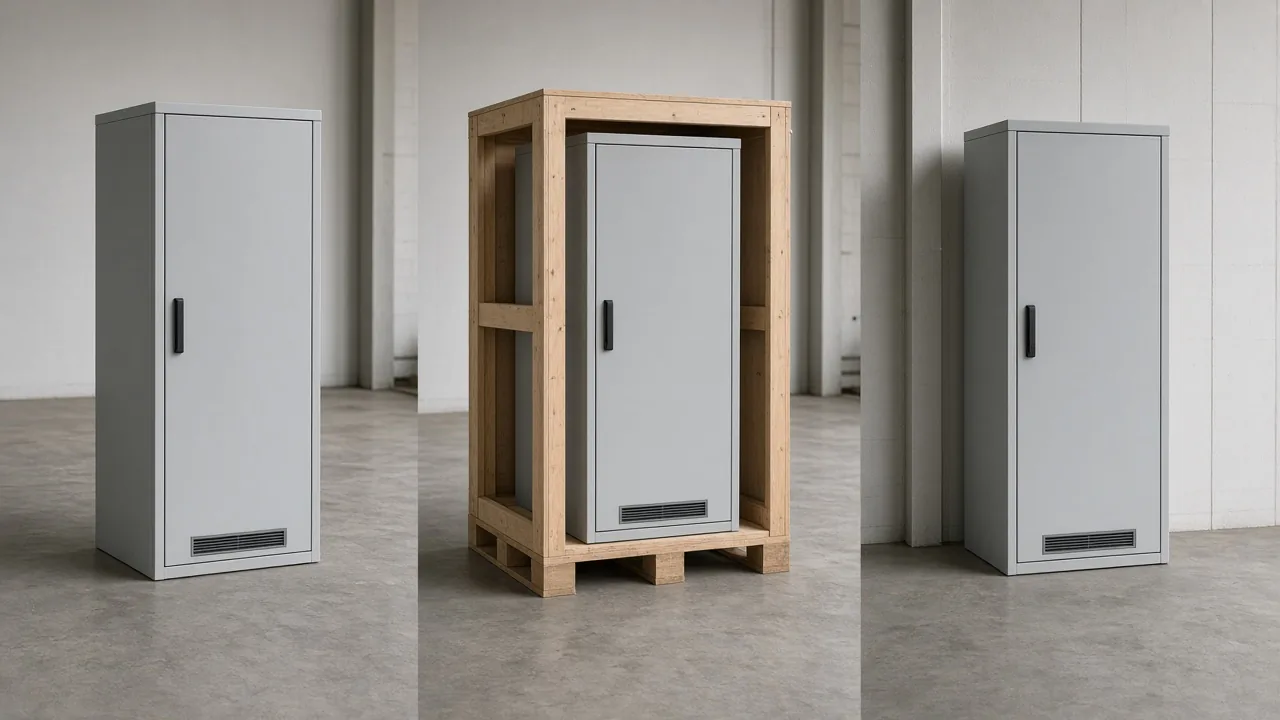
The RVV Gen II manual shows why the packed state matters. Before placing that vender, the installer unwraps it and removes the padding, splits and removes the shipping skid while tilting the vender slightly, and lifts out a wooden shipping block under the door. The manual does not list packed dimensions. Ask the supplier for outer packing dimensions, gross weight and a packing list for the quoted unit, and agree where the packing comes off: at the dock, inside the building or at the final position.
For service space, the same manual asks for at least 4 in (10 cm) behind that vender for refrigeration ventilation and a well-ventilated location rather than a confined space. All four leveling legs must touch the floor, and a support leg is extended to the floor with a 1-1/2 in (38 mm) wrench so the vender does not tip forward. These instructions belong to that model. Ask for the same section of the quoted unit's manual, including side and top clearance and the space needed to open the door.
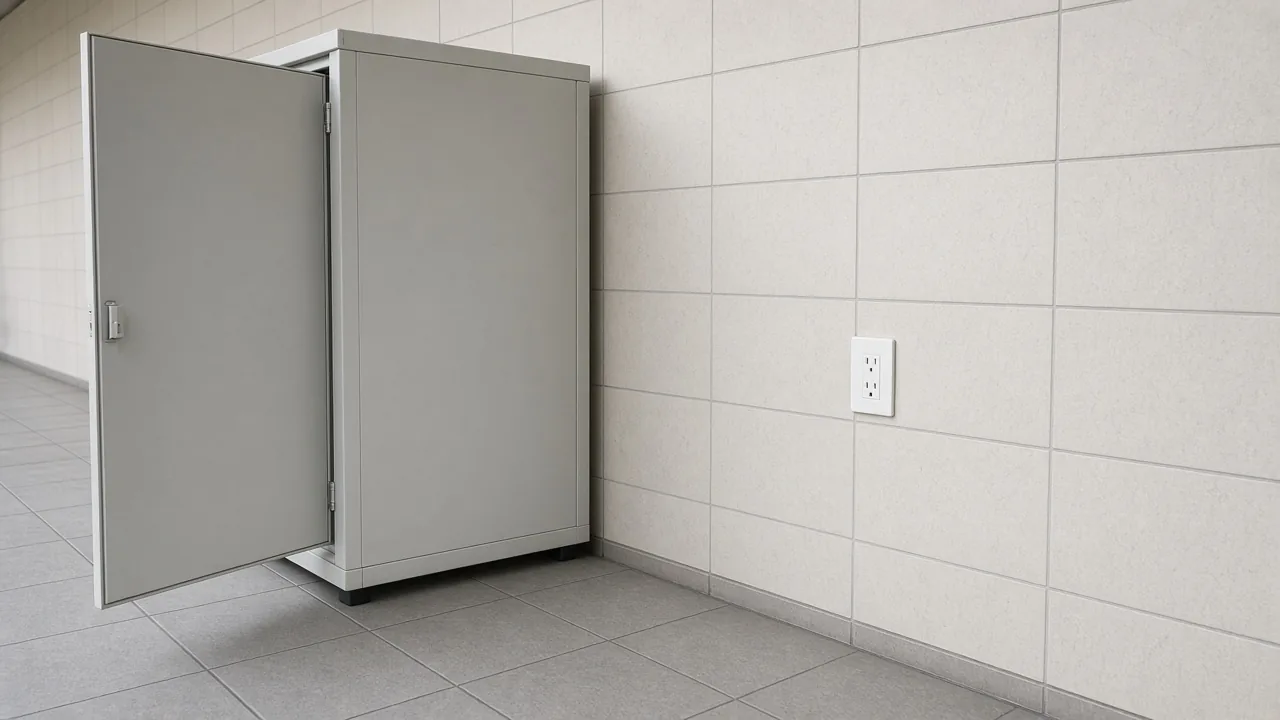
Common mistake: checking the alcove against the cabinet width only, without the door-opening space in front or the ventilation gap behind.
Power and water requirements belong to the model. Copy them from its manual and have a qualified electrician or installer confirm the site.
The RVV Gen II manual, for example, specifies 115 V AC at 60 Hz, a minimum 15 A service, outlet voltage between 103 and 129 V AC and a grounded outlet, and says the circuit should be dedicated. It does not recommend extension cords unless a certified electrician has authorized one. The University of Maryland list shows how requirements change by machine type: its hot beverage machine needs a dedicated circuit and a water supply, and the university does not allow extension cords.
On the worksheet, record the outlet type and location at the final position, whether the circuit is dedicated, and any water or drain connection the quoted machine needs. This page does not size circuits or specify connections.
Ask for these documents for the exact model and variant being quoted.
Cabinet height, width, depth and empty weight.
Outer packing dimensions, gross weight and the packing list, including how the unit is fixed to its skid or crate.
The installation section of the manual: clearances, ventilation, leveling, anti-tip steps and the door-opening space.
Electrical requirements and any water or drain requirements.
A written statement of who handles transport, unloading, moving to position, unpacking and installation.
This catalog's combo vending machines page asks for the same packing details, and the Slim Combo record shows a cabinet size with a note to request packing dimensions separately.
Send the quoted unit or machine configuration, any packed dimensions you already have, and the narrowest door, turn and lift on your route. We use the discussion to identify missing documents and open measurements; transport, unloading and installation responsibilities still need to be written into the quotation. Send your project requirements to our team on WhatsApp.
Cabinet size: use the selected model and variant on the quotation.
Location capacity: combine your product mix, expected purchases and replenishment schedule when comparing cabinet configurations.
Item capacity: it depends on the model and the product mix. Ask for capacity against your own product list.
Custom or ambiguously named cabinets: obtain a model drawing with the exact dimensions before planning delivery.
Outdoor suitability, local code compliance, price and lead time: confirm these for the quoted unit with the supplier and your local professionals.
| Checkpoint | What to record | Example from a named document | Who signs |
|---|---|---|---|
| Quoted unit | Model and variant on the quotation; cabinet H x W x D; empty weight | Slim Combo machine configuration: 76.5 x 28.7 x 31.2 in, approx. 474 lbs (configuration reference, 13 September 2026) | Supplier |
| Packed shipment | Outer packed H x W x D; gross weight; skid or crate; packing list | Not listed in the RVV Gen II manual (April 2017); request it for the quoted unit | Supplier |
| Unloading point | Dock, ramp or kerb; surface to the entrance; who unloads | University of Maryland vending page: consider access by ramp, elevator or loading dock | Receiving contact |
| Doors | Clear width and height with each door fully open | Blank until measured on site | Site owner |
| Corridors and turns | Narrowest width; width on both sides of each turn; lowest overhead point | University of Maryland: no corridor narrowed below 44 in (that university's egress rule) | Site owner and installer |
| Lifts and stairs | Lift door opening; car width, depth and height; posted rated load; any steps | Blank until measured on site | Building manager |
| Unpacking point | Where the skid and packing come off; room to tilt and lift the unit | RVV Gen II: remove padding, shipping skid and wooden door block before placing | Installer |
| Final position | Available width, depth and height; floor surface and level; door-opening and refill space in front | RVV Gen II: at least 4 in (10 cm) behind for ventilation; leveling legs and support leg on the floor | Installer |
| Power and utilities | Outlet type and location; dedicated circuit; water or drain if required | RVV Gen II: 115 V AC, 60 Hz, minimum 15 A service; manual says the circuit should be dedicated; 103-129 V AC | Qualified electrician |
| Sign-off | Name, date and open items for each row | None | Buyer |
| Item | Why we need it | Example format |
|---|---|---|
| Quoted unit or machine configuration | Match the measurements to the right cabinet | Model and variant on the quotation, or the catalog page name |
| Packed dimensions and gross weight | The packed unit is what travels the route | H x W x D in inches and gross weight in lbs, from the packing list |
| Narrowest door and turn | Find the point that limits delivery | Clear width x height in inches; one photo per door and turn |
| Lift details, if a lift is used | Compare the car and rated load with the packed unit | Door opening; car width, depth and height; posted rated load |
| Final position | Check clearances and door-opening space | Sketch with width, depth and height; photo of the space |
| Power at the final position | Compare with the quoted unit's electrical requirements | Outlet photo; electrician's note on the circuit |
| Responsibilities | Keep unloading and installation visible in the quotation | Named party for transport, unloading, positioning and installation |
These examples describe the named machines and campus rules. Use the selected unit’s manual and local installation requirements for your project.
There is no single height. Several full-size cabinets in the documents on this page are listed at 72 in (6 ft); this catalog's Slim Combo record lists 76.5 in, and one can machine on the University of Maryland list is 79 in. Use the height on the quoted unit's sheet, and the packed height for the route.
Vending machine manufacturing by 特拼科技. Explore product configurations, sample checks, payment integration and factory acceptance for your operating site.
Send the items in the project brief above to discuss the selected configuration, sample checks and delivery scope. Share your products, site and payment requirements with our team.